
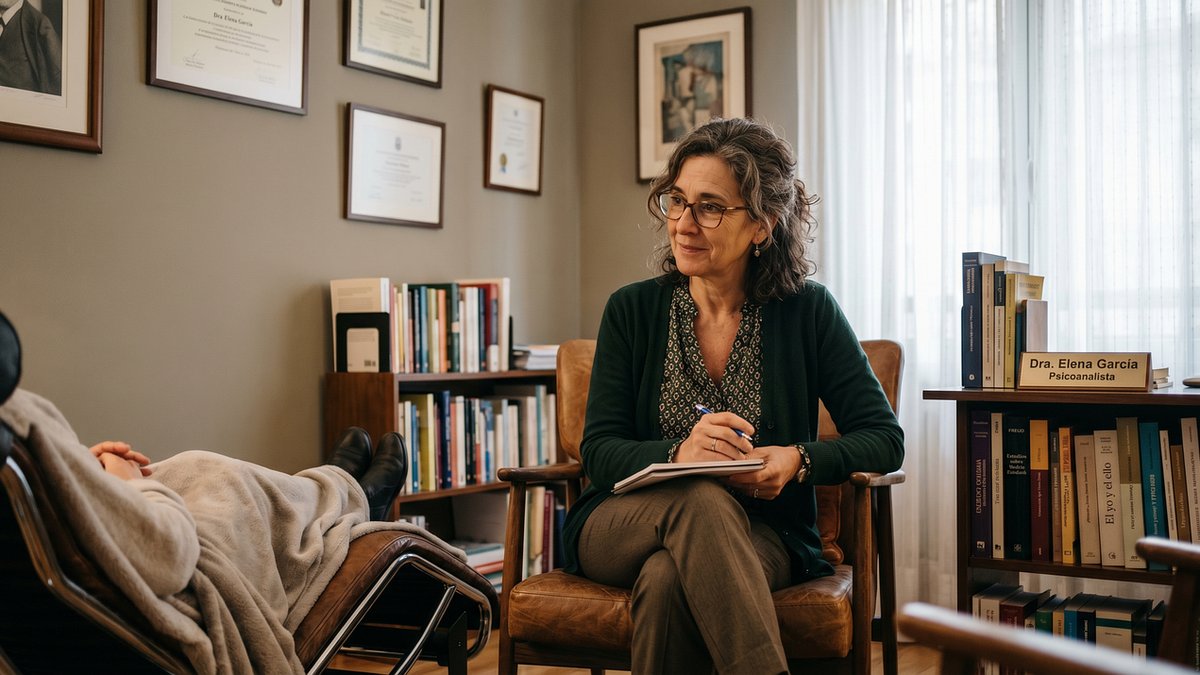
Most couples who walk into therapy do not arrive because they have stopped caring. They arrive because they care deeply and cannot seem to talk about it without the conversation collapsing into the same tired script. One partner raises a concern, the other hears criticism, defences go up, and within minutes you are arguing about whose turn it was to empty the dishwasher when the real issue is feeling unappreciated or unseen.
This is not a sign that your relationship is broken. It is a sign that your communication patterns have become automatic. Patterns are useful — they save energy — but the ones we develop in conflict often protect us at the other person's expense. Couples therapy works because it slows those patterns down enough to see them clearly, then offers something different to try.
A skilled therapist will usually begin by mapping the cycle rather than assigning blame. You might be asked to describe a recent disagreement in detail: who said what, what you felt in your body, what you assumed the other person meant. Over one or two sessions, a picture emerges of a repeating loop — often something like pursue and withdraw, where one partner pushes for connection and the other pulls back to avoid conflict, each response fuelling the other.
From there, the work becomes practical. The therapist may pause a conversation mid-flow and ask you to try a different sentence, or to reflect back what you heard before responding. Some therapists use structured exercises; others work more conversationally. Either way, the aim is the same: replacing reaction with choice.
While every relationship is unique, certain patterns show up again and again in the therapy room.
Naming these patterns out loud is often the first relief couples feel. It shifts the framing from "you are the problem" to "this loop is the problem, and we are both caught in it".
Therapy is not confined to the consulting room. Between sessions you will usually be given something to practise, and the small things matter more than grand gestures.
Attendance matters, and so does honesty. If you only bring the polished version of events, the therapist can only work with the polished version. It helps to arrive with a specific example rather than a general complaint, and to be willing to hear something about your own contribution that may be uncomfortable.
It also helps to agree on what you are working towards. Some couples want to decide whether to stay together; others want to rebuild trust after a breach; many simply want to stop having the same fight every Thursday. Being clear about the goal gives the therapy direction and gives you something to measure progress against.
Progress is rarely linear. You will still argue. The difference is that arguments become shorter, less cruel, and more likely to end with both people feeling heard rather than one person winning and the other quietly keeping score.
You do not need to be in crisis to benefit from couples therapy. Many couples come precisely because things are broadly good and they want to protect what they have. Others come after a difficult year, a bereavement, a new baby, a job loss or an affair. Waiting until resentment has hardened over years makes the work harder, though not impossible.
If conversations at home consistently end in tears, silence or shouting, or if you are avoiding important topics altogether, that is reason enough to reach out to a qualified therapist. In the UK, you can ask your GP for guidance, contact a professional body for a register of accredited practitioners, or speak to a trusted service that specialises in relationship counselling.
Communication is a skill, not a personality trait, and skills can be learned at any stage of a relationship. With the right guidance and a genuine willingness to listen, most couples can replace the old, painful script with something far more generous — and far more likely to last.

Hi, my name is Anthony kuber. I am artist and fashion designer.
I love to travel and writing blogging.
Your email address will not be published. Required fields are marked *
Software Developer & Writer
Hey, I'm Diva, a developer and writer blending code and creativity. I'm driven by a deep curiosity and a relentless pursuit of excellence. Join me as I craft digital solutions and captivating stories.


